Home › Commercial Concrete Slabs and Flatwork
Longview Concrete Pros pours commercial concrete slabs in Longview, TX for warehouses, shops, loading areas, and equipment pads. We deliver flatwork with the right thickness, reinforcement, and finish for your load requirements. From laser screeded interior floors to exterior heavy duty aprons, our slabs are built to handle real world traffic and wear.
Longview Concrete Pros provides professional commercial concrete slab throughout Longview, TX, Texas and the surrounding area. Our licensed, insured crew delivers safe, clean, on-time work with a free estimate before anything begins. Call
(430) 703-2740 or request your free quote.
Commercial Slabs and Flatwork for Longview Businesses
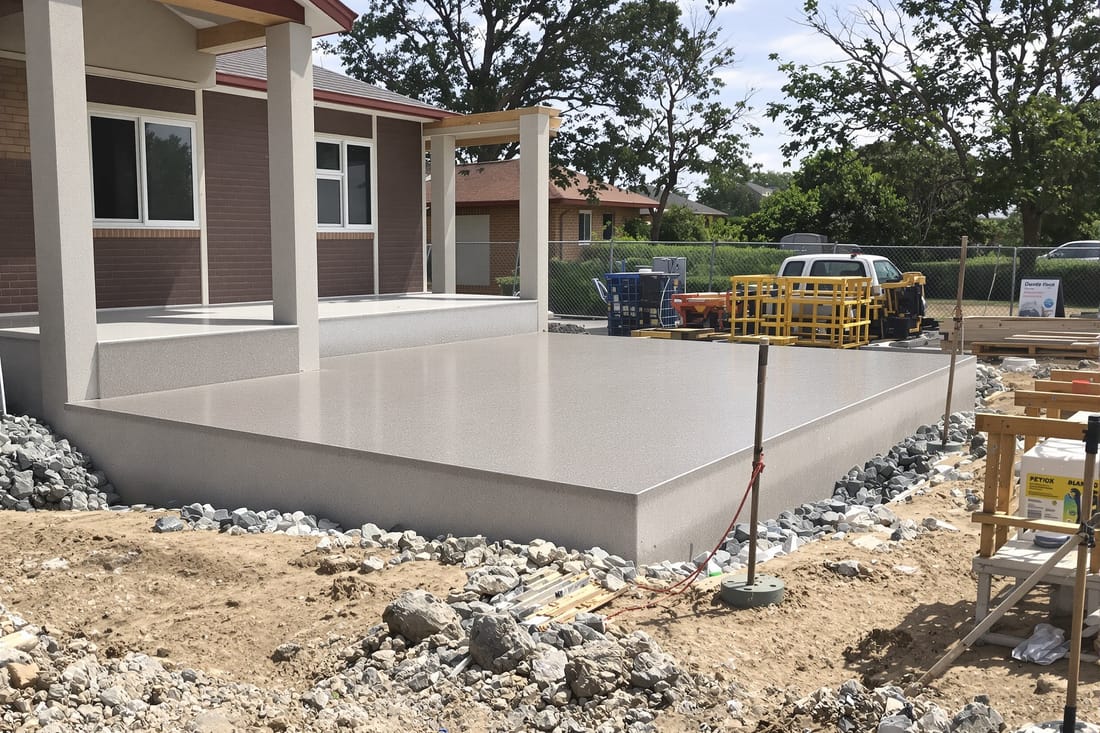
Longview Concrete Pros builds commercial concrete slabs and flatwork that are designed specifically for East Texas soil, weather, and usage demands. Whether you are planning a new shop building off Estes Parkway, a warehouse near I-20, or a retail pad site along Loop 281, your slab is the core structural element that keeps the building stable and functional. Getting this part right saves years of repairs and operational headaches.
Our team focuses on commercial projects of all sizes, from small office additions to large distribution facilities. We understand local building requirements, how our clay-rich soils behave through wet springs and hot summers, and what concrete mixes hold up best under forklift traffic, delivery trucks, and constant foot traffic. Every project is engineered around how you actually use the space, not a one-size-fits-all slab detail pulled from a generic plan set.
Working with a local crew means you get quicker site visits, easier coordination with your other contractors, and communication that fits the way business is done in Longview. We are on site when promised, we keep job areas as clean as the work allows, and we stay focused on getting your slab ready so you can keep your build schedule moving.
How We Plan Your Commercial Concrete Slab
The most important work on a commercial concrete slab happens before any concrete truck shows up. Longview Concrete Pros starts every job with a walkthrough of your site, a review of building plans, and a conversation about how your business will use the space. A slab for a light office space is not the same as one for a repair shop with oil lifts or a warehouse with racking systems.
We begin with site evaluation: checking drainage patterns, existing grade, soil conditions, and access for trucks and equipment. If the soil is soft, has expansive clay, or has been poorly compacted fill, we will recommend remediation such as undercutting and bringing in select fill or installing a thicker base rock layer. Skipping this step is the common cause of slab cracking and settlement in Gregg County and the surrounding area.
Next we coordinate with your engineer or provide guidance based on typical loading conditions in our region. We look at slab thickness, reinforcement type (rebar, welded wire mesh, or fiber reinforcement), joint layout, and any thickened edge or footing requirements. For example, a 6 inch slab with rebar grid and doweled joints might be recommended for a truck dock, while a retail shell could do well with a 4 to 5 inch slab with wire mesh and correctly spaced control joints. This early planning is where we help you balance upfront cost with long-term performance.
Site Prep, Base, and Formwork That Protect Your Investment
Commercial concrete flatwork lasts only as long as the base underneath it. Longview Concrete Pros treats subgrade and base prep as a nonnegotiable step. After stripping vegetation and organic soil, we grade the area to the design elevation and compact the native soil. If the compaction test or our experience on site shows weak or pumpy ground, we bring in stabilized select fill or crushed limestone, then compact in layers to achieve a solid base.
We typically install a minimum 4 inch compacted base for lighter duty slabs and thicker sections for loading zones or high bay warehouses. A well prepared base helps the slab maintain uniform support, reduces differential settlement, and improves drainage away from the building. Where needed, we add vapor barriers under interior slabs to reduce moisture transmission that can damage flooring adhesives or cause humidity problems inside the building.
Formwork is then set with precise elevations and slopes. For exterior flatwork like loading aprons, dumpster pads, and sidewalks, we establish slopes that shed water away from door thresholds and building walls, typically in the range of 1 to 2 percent. On interior slabs we shoot grades so that finished floors will be flat enough for your chosen flooring or racking systems. Proper form bracing is critical around thickened edges, piers, and grade beams, especially in areas where trucks will be backing up as the concrete is placed.
Concrete Placement, Reinforcement, and Finishing Options
Once the base and forms are ready, we schedule the concrete pour around Longview traffic conditions and plant availability so trucks arrive in sequence, not all at once or hours apart. For commercial concrete slabs we usually specify mixes in the 3,000 to 4,000 psi range, with mix designs chosen for the season. In hot Longview summers we pay close attention to water content and set time so the crew has enough working time to place and finish without adding excess water at the site.
Reinforcement is installed according to your plans. This might be #4 rebar at 12 inches on center each way, welded wire mesh pulled up into the slab, or a combination of steel and fiber reinforcement. Our crews tie rebar securely, place it on proper chairs, and verify cover depth so steel is in the correct position within the slab, not lying on the ground where it does little good.
During placement, we use vibrators around thickened sections, columns, and edges to remove air pockets and help the concrete consolidate. Screeding, bull floating, and edging come next. For large interior floors we can provide laser screed finishing when the project size and tolerance requirements call for it. Finish options include broom finish for exterior flatwork, hard-trowel finishes for interior industrial slabs, and lightly troweled surfaces for areas that will receive tile, epoxy, or other floor coverings.
Jointing is critical on commercial flatwork. We sawcut control joints at calculated spacing based on slab thickness, usually within 6 to 24 hours after placement depending on weather. This controlled cracking strategy is what keeps random cracks from appearing in the middle of your shop or showroom floor.
Dealing With Longview Weather, Drainage, and Soil Movement
East Texas weather creates real challenges for commercial concrete slabs, and Longview Concrete Pros plans for those conditions from the start. Our region sees intense rain events, high humidity, and extended heat, all of which affect how concrete cures and how the ground under your slab behaves.
During wet spells, we make sure subgrades are not being worked when they are saturated, since that leads to hidden soft spots that show up as slab settlement later. If rain is in the forecast on pour day, we prepare with protective coverings and adjust schedule rather than rushing a critical pour. In summer heat we may use set-retarding admixtures, misting, and earlier start times to protect the surface from rapid moisture loss and plastic shrinkage cracking.
Drainage around commercial flatwork gets special attention. Poorly planned slopes or missing drains will cause water ponding, which leads to surface damage, algae growth, and premature deterioration. We coordinate slab elevations with parking lots, loading docks, and door thresholds, and recommend trench drains or area drains where needed so your slab and flatwork stay functional and safe.
Expansive clay soils common in this part of Texas can move with moisture changes. For certain structures we may recommend thicker slabs, additional reinforcement, or structural piers to isolate the slab from seasonal soil movement. These measures add cost up front but can prevent expensive structural repairs, stuck doors, and uneven floors years down the road.
What Affects Cost and Schedule on Commercial Concrete Slabs
Business owners and builders in Longview want to understand what really drives the price of a commercial concrete slab. Longview Concrete Pros is transparent about the main cost factors so you can budget accurately and compare bids fairly.
Key price drivers include slab thickness, reinforcement type and spacing, the complexity of the shape, site access, and how much base work is required. A straightforward 5 inch retail slab on a well prepared pad with good truck access will cost noticeably less per square foot than a heavy duty 8 inch shop slab with thickened equipment pads, heavy rebar, and difficult access behind an existing building.
Other real costs are project staging and coordination. Tight downtown sites or locations with limited staging areas require more labor to move materials and manage pours safely. Night or weekend work, which is sometimes necessary to keep your operations running, also affects pricing.
Schedule is influenced by inspection timing, weather windows, and the readiness of related trades. We coordinate with plumbers, electricians, and steel erectors so embeds, conduits, and anchor bolts are placed correctly before the pour. Clear communication here prevents costly demo and rework. When you share your target completion date early, we build a pour and curing plan that fits your overall construction timeline instead of delaying the trades that follow.
Choosing Longview Concrete Pros and Next Steps
Selecting the right contractor for your commercial concrete slab is about more than price per square foot. You need a crew that understands structural requirements, local conditions, and the way commercial projects are scheduled and inspected in and around Longview.
Longview Concrete Pros is a local company, so when you call, you are talking to people who drive the same roads and work with the same suppliers and inspectors you do. We know which areas around town tend to have poor native soils, what city inspectors expect to see for slab thickness and reinforcement, and how to schedule pours around local plant capacities to avoid delays.
If you are in the planning stage, we can review preliminary drawings, identify potential slab issues early, and give you realistic budget ranges before you lock in your design. For projects already under design, we work smoothly with your engineer and general contractor, providing input on constructability and sequencing.
To move forward, gather any site plans, structural notes, and usage details for your project, then contact Longview Concrete Pros for a site visit. We will walk the property with you, discuss loading conditions and future expansion plans, and provide a written proposal that spells out slab thickness, reinforcement, joint layout, and finishes. With that information, you can compare options with confidence and choose a slab solution that supports your Longview business for decades.